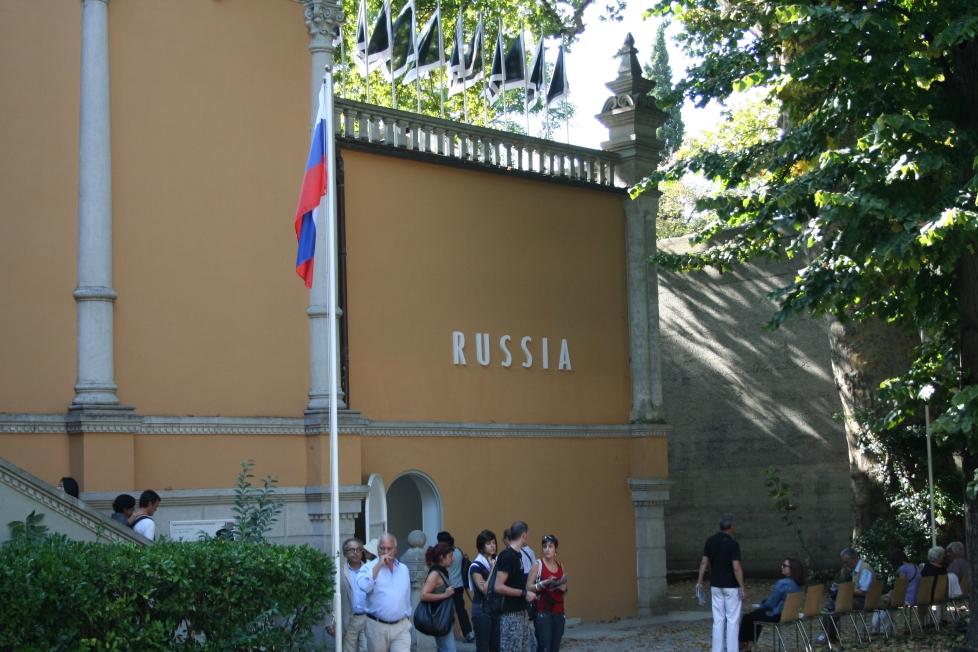
The upcoming Venice Biennial, which opens on 9 May, is facing unusually intense criticism after it was announced last week that the Russian Pavilion – vacant since 2022, when both artist and curator withdrew in protest against the invasion of Ukraine – will reopen.
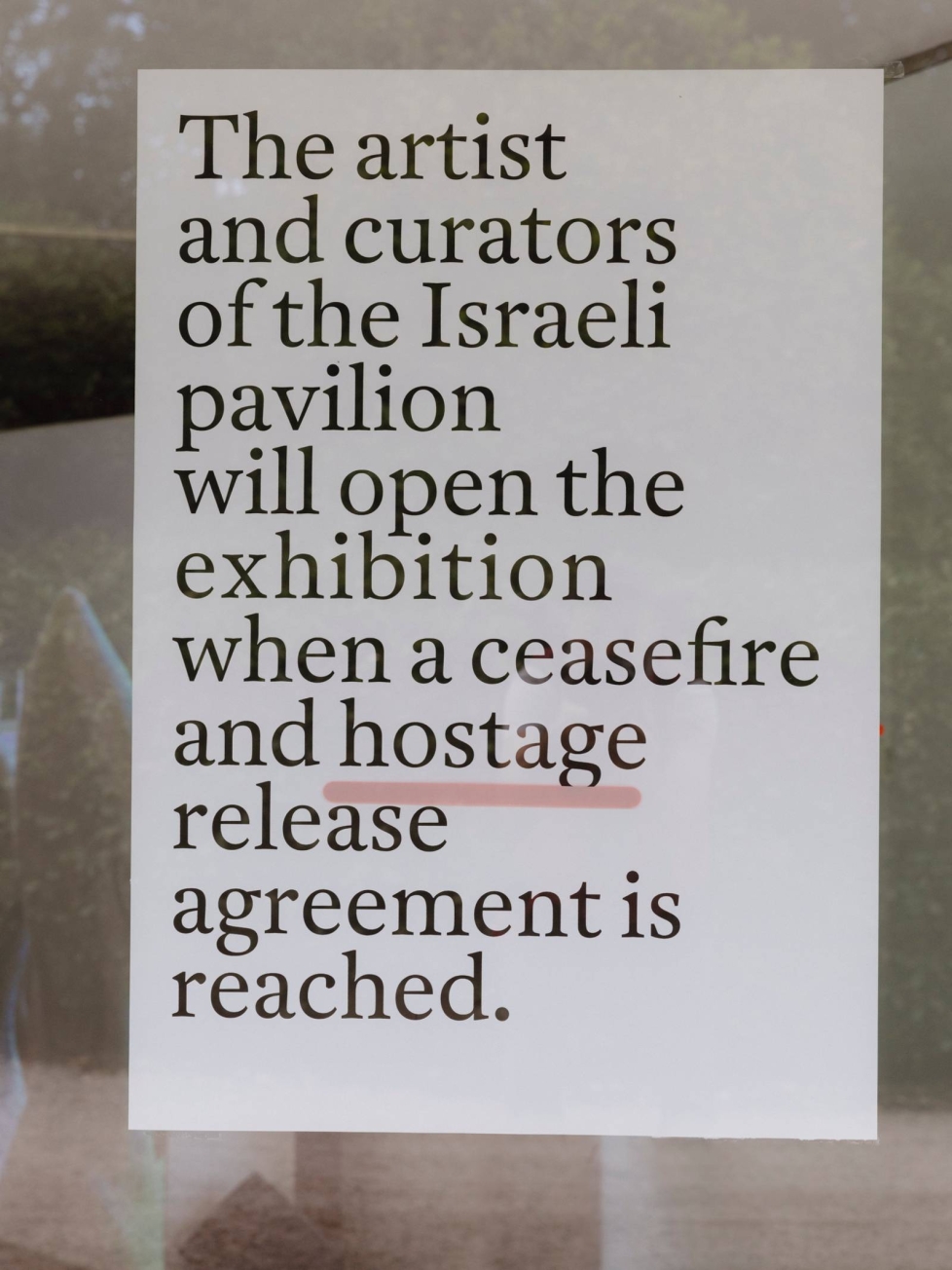
At the same time, Art Not Genocide Alliance (ANGA), an anonymous coalition of artists, curators, writers, and cultural workers is mobilising to have Israel excluded from the biennial in response to the war in Gaza. In 2024, the group gathered more than 24,000 signatures, resulting in the Israeli Pavilion remaining closed during the previous edition. Since last autumn, ANGA has circulated an open letter reiterating its demand for Israel’s exclusion and warning of a renewed boycott campaign. “Our demand is simple: the immediate and complete exclusion of the state of Israel from the Venice Biennale,” the letter states.
Today, 17 March, the biennial’s president, Pietrangelo Buttafuoco, and its board were presented with an updated version of the letter, now signed by 182 artists, curators, and cultural workers participating in this year’s biennial (of which 28 are listed as anonymous). Among the signatories are curators and artists from 35 of the 99 national pavilions, including Tori Wrånes and Jenny Sutela, representing the Nordic and Finnish Pavilions respectively, and the Icelandic Pavilion’s curator, Unnar Örn.
European ministers call for Russia’s exclusion
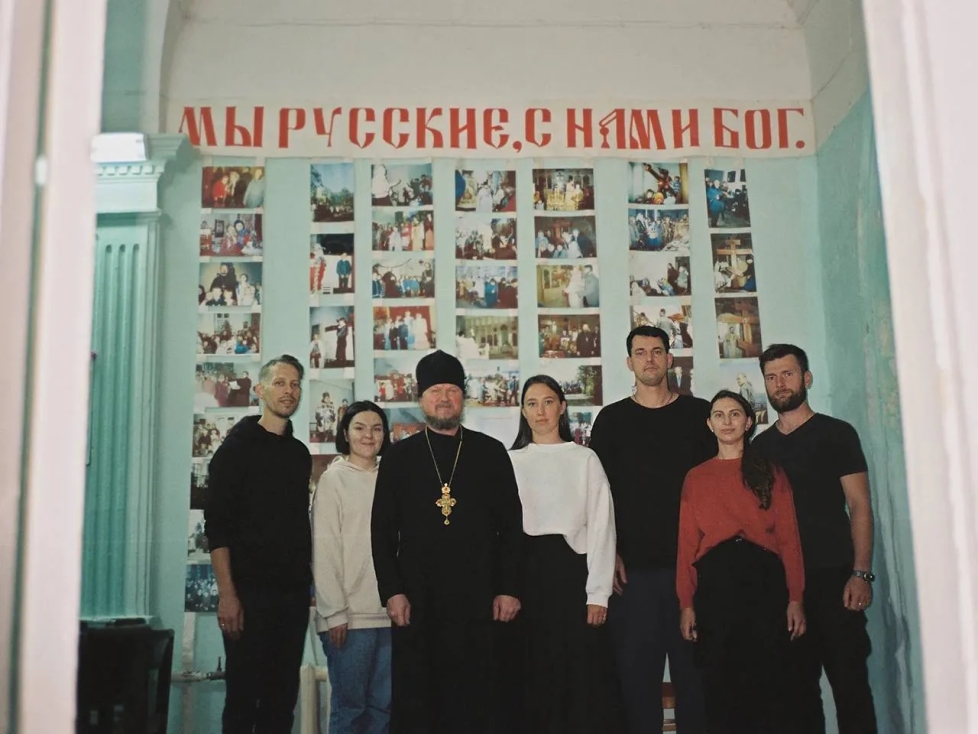
Israel’s participation has not, however, provoked the same level of response from European governments as has the reopening of the Russian Pavilion, which Ukraine’s foreign minister, Andrii Sybiha, has described as a “whitewashing of war crimes.” The controversy concerns not only Russia’s return to the Giardini, but also the appointment of Anastasia Karneeva as curator of the pavilion. Karneeva is the granddaughter of Russia’s foreign minister Sergei Lavrov and the daughter of a general in the Russian security services FSB, Nikolai Volobuyev – ties that place her firmly within Russia’s political elite.
Last week, an open letter signed by 22 European culture ministers – including all the Nordic countries except Iceland – was sent to Buttafuoco and the biennial’s board, urging them to exclude Russia. The letter cites the destruction in Ukraine and warns that participation in the biennial may be used by the Russian regime «to project an image of legitimacy and international acceptance that stands in stark contrast to the reality of Russia’s ongoing war against Ukraine and the destruction of Ukrainian cultural heritage, and European and international sanctions.”
In the wake of the letter, the European Commission has also intervened. In a statement, Executive Vice-President Henna Virkkunen and Commissioner Glenn Micallef stressed that “member states, institutions and organisations must act in line with EU sanctions and avoid providing a platform to individuals who have actively supported or justified the Kremlin’s aggression against Ukraine.” Should the biennial fail to reconsider its decision, they warned that the EU may take further measures, including withdrawing a EUR 2 million grant.
Russia’s participation has also triggered tensions within Italian politics, where it clashes with the Meloni government’s support for European sanctions. Italy’s culture minister, Alessandro Giuli, asked the ministry’s representative on the biennial board, Tamara Gregoretti, to resign, citing a breach of trust after she failed to inform the ministry about Russia’s participation. The ministry has also requested access to the biennial’s correspondence with Moscow and an account of the Russian Pavilion’s involvement, including whether it complies with existing sanctions.
“My biennale will be the true truce”
Following the full-scale invasion in 2022, the biennial issued a statement condemning Russia’s actions and declaring that “for as long as the situation persists” it would “not accept the presence at any of its events of official delegations, institutions or persons tied in any capacity to the Russian government.” That position has now shifted. In a press release announcing of this year’s participants, the biennial rejected “any form of exclusion or censorship of culture and art.” It further stated that the exhibition should “be a place of dialogue, openness, and artistic freedom, encouraging connections between peoples and cultures, with the enduring hope for the cessation of conflicts and suffering.”
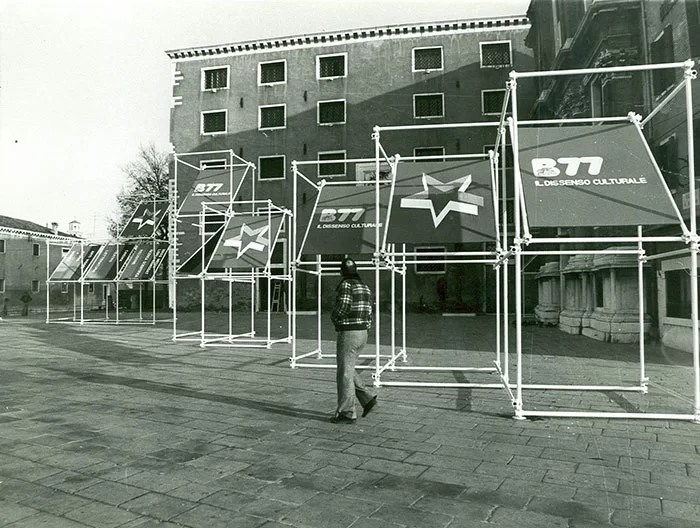
Buttafuoco has rejected accusations that he is helping to normalise Kremlin policy. He has described the biennial as “a space of coexistence for the whole planet,” and in an interview with the newspaper La Repubblica on 5 March stated: “My biennale will be the true truce.” In line with this approach, he has announced plans for dedicated programmes for dissident artists from several countries, including Russia, China, and the United States, which he presents as a continuation of Carlo Ripa di Meana’s Biennale del Dissenso of 1977. That programme highlighted artists in opposition to the official aesthetics and ideology of Eastern Bloc states and prompted diplomatic protests from Soviet authorities, who denounced it as anti-communist propaganda.
Danish minister open to boycott
The Danish Pavilion, which this year presents an exhibition by the artist Maya Malou Lyse, is located next to the Russian Pavilion in the Giardini. In an interview with the Danish public broadcaster DR, Denmark’s culture minister Jakob Engel-Schmidt expressed surprise that the organisers had not halted Russia’s participation. “As long as Russia is waging an active war of aggression against Ukraine, it should be excluded from international art and cultural events,” Engel-Schmidt said, adding that Denmark should consider withdrawing if it can gather sufficient support from like-minded nations.
Norway is also represented in Venice, with Tori Wrånes exhibiting in the Nordic Pavilion alongside Sweden’s Klara Kristalova and Finland’s Benjamin Orlow. Kunstkritikk has asked Norway’s minister of culture and equality, Lubna Jaffery, whether Norway would consider supporting a boycott aimed at forcing the biennial to sever its collaboration with Russia, as suggested by her Danish counterpart. We have also asked her how the government views Israel’s participation, and whether that too warrants official condemnation. State Secretary Trude Storheim responded that “Norway does not have a tradition of boycotting cultural or sporting events,“ adding: “Artistic freedom is strongly upheld in Norway, and we have enshrined the ‘arm’s length principle’ in the Cultural Act.”
Translated from Norwegian
The article was updated 17 March, 17:47.