Contemporary painting is sometimes understood less as an autonomous object than as a trace of the artist’s social and intellectual life. For example, in the early 2010s, critics like Diedrich Diederichsen and Isabelle Graw argued in different ways that its value lies in how convincingly it indexes that life – the artist’s networks, habits, and forms of labour. Marie Karlberg’s new show at the Stockholm gallery Issues takes this logic almost literally.
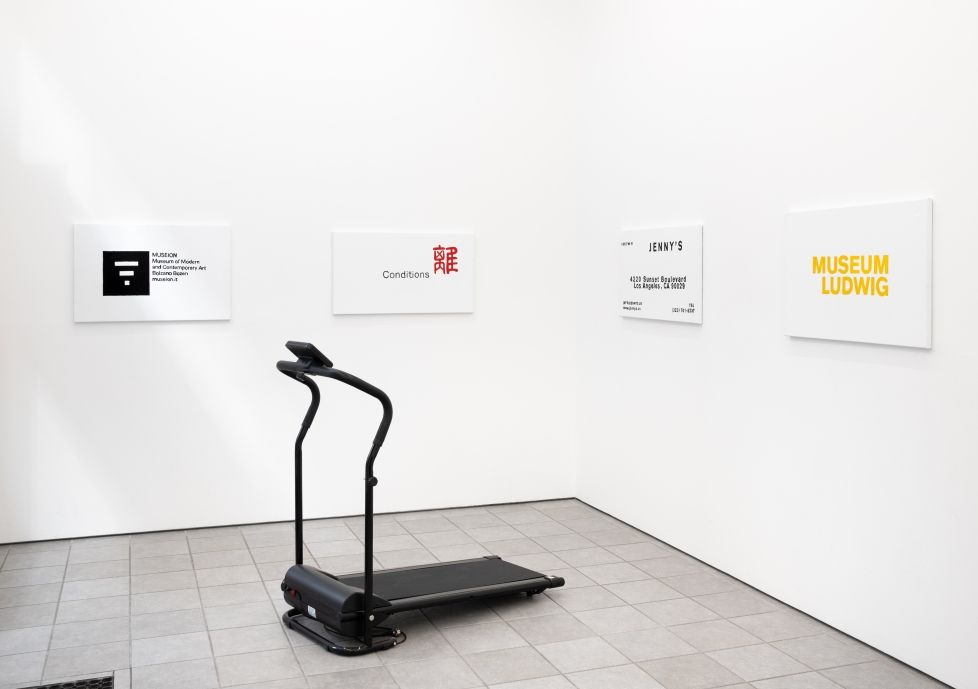
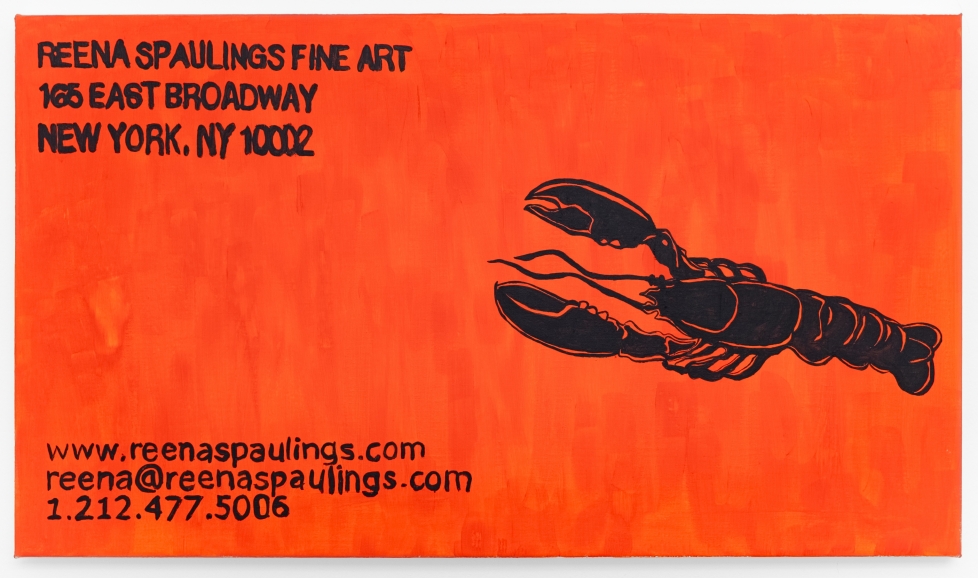
The show, titled Like a Padlock, comprises a suite of ten art-world business cards reproduced in acrylic on linen at a scale of roughly 10 to 1. Executed with a minimum of painterly effects, each work is titled with the first name of the person who gave Karlberg the card. Though the scope is global, New York, Berlin, and Cologne predominate: John (Reena Spaulings, all works 2026), Tobi (Amant), Filippo (Galerie Buchholz), and Yilmaz (Museum Ludwig).
Also included are Katarina (the Stockholm artist-run gallery Antics) and Marie, which bears the stamp of Beau Travail, the gallery Karlberg founded in 2024. Filling out the bijou storefront is the readymade sculpture Cirkulation, Rörelse, Utbyte (Circulation, Movement, Exchange), a treadmill that doubles as a stage for a series of monologues performed by the artist’s coterie.
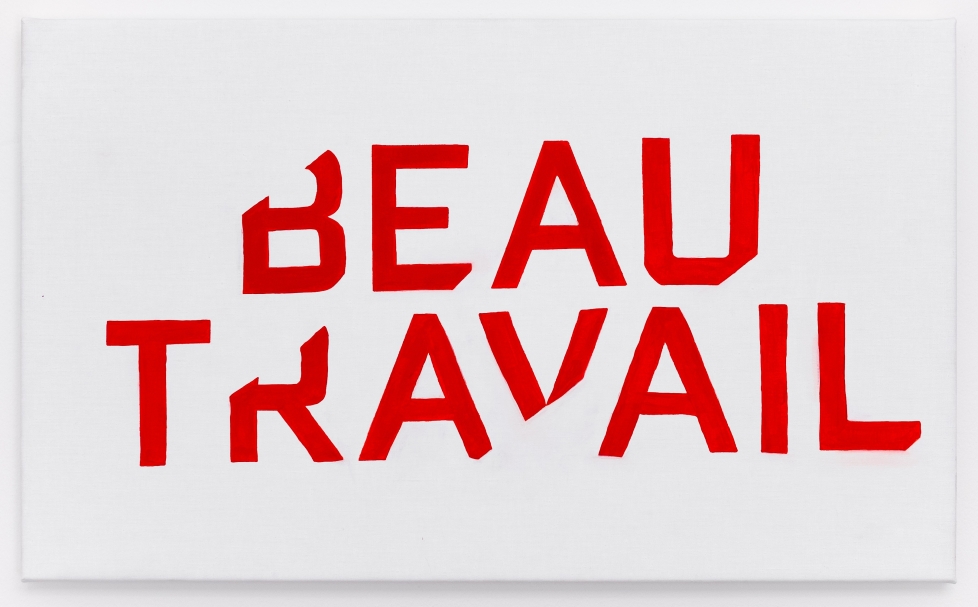
The monologues point to Karlberg’s practice as a performance artist, which provides a useful context for the show. Whereas a painting, as an ideal commodity, can metonymically substitute for its author, performance artists tend to become commodities themselves. In this sense, Karlberg’s paintings perform a necessary displacement. Yet, a business card is primarily a representational device; like a painting, it mirrors the individual whose name it bears. It also signals a possible transaction, that economic activity could potentially take place.
From this vantage, Karlberg’s show stages painting as a “success medium,” as Graw puts it. That is, as a prop for self-promotion and branding, a device promising further movement, circulation, and exchange. Just so, these paintings function rather like indexes, but without the metaphysics – signs of a life, but one whose vitality is measured primarily by the prestige of its professional networks. For proof, we need look no further than the first line of the gallery text, penned by none other than Daniel Birnbaum: “Marie Karlberg is an important person.”
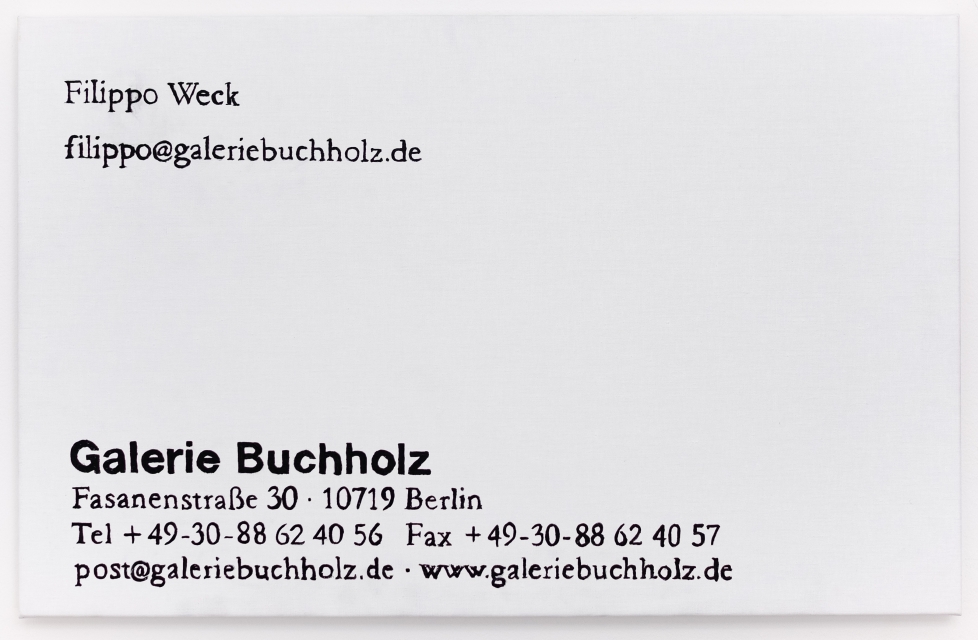
The statement is, of course, ironic – especially given the artist’s earlier works like A Woman for Sale (2012) and I’m Just a Symptom of Moral Decay (2025). Karlberg’s target is not painting’s freewheeling present, but the dynamics of value that sustain it. The show rehearses the fantasy of success in the global art world, while exposing its obstacles (the padlocks of the title) as shaped less by exclusions of gender, race, and class, than by a kind of desperate provincialism. As Birnbaum again affirms: “this kind of business card cannot belong to a nobody.”
Karlberg’s efforts as a gallerist have done much to reinvigorate Stockholm’s artist-run scene and boost its relevance on an international stage. Whether her paintings will resonate beyond their local confines nevertheless remains very much in question. I suspect that for the likes of John, Tobi, Filippo, and Yilmaz – perhaps even for Diedrich and Isabelle – they will offer too little, too late.