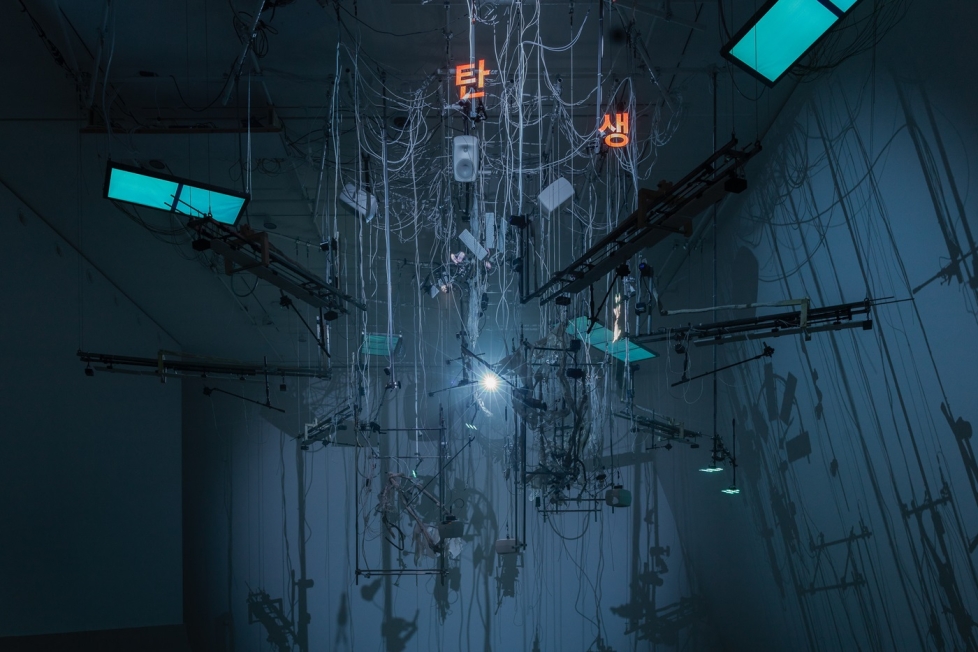
There is nothing to fault in the ambition or the execution of Kim Hankyul’s exhibition Shore at the Munch Museum. The same has, by and large, been true of previous instalments in the Solo Oslo series. Typically, these are atmospheric installations where lighting is deployed to full effect – most notably in Sandra Mujinga’s (2021) and Piya Wanthiang’s (2022). An exception is Admir Batlak’s more sparing, cooler, object-oriented display (2023). Constance Tenvik’s (2024) perhaps falls somewhere in between. It remains unclear whether this tendency is a consequence of the architecture’s prompts – high ceilings, which invite artists to ‘use the space’, as they say – or whether it reflects a preference, on the part of jury and curator, for a technically elaborate and immersive strand of installation-making. In any case, the series’ cumulative statement seems to say something about the primacy of a certain mode of address that thrives on proximity.
Drawing inspiration from so-called foley artists, practitioners of a now-vanished analogue craft of sound effects for film and radio, Hankyul makes elaborate kinetic installations that generate sound through ingenious mechanical contraptions. The real-time element invites comparison to a kind of theatre, but one where the hierarchy between mechanical and biological bodies is turned on its head. His pieces are often organised around dramatic narratives, yet the stories are delivered through abstraction and indirection. The machines and technical gear that would normally remain in the background take centre stage, while people and language recede into faint traces. In his exhibition Bildungsroman at Nitja in 2023, for instance, a reading of literary quotations was folded into an arrangement of textile ‘whoopee cushions’ that inflated and deflated, automated percussion instruments, and ceramic sculptures reminiscent of human foetuses.

Shore has a more threatening tone. Its materials recall the installation Forest_Sound_Motor_Machine.mov, which Hankyul showed at Oslo’s Kunstnerforbundet in 2024, but the atmosphere here is thicker and murkier, and this intensifies the sense of stepping into a separate sphere. In a video interview made for the exhibition, Hankyul says he wants it to feel like standing on the seabed. He achieves this by suspending the installation from the ceiling and setting it in motion so it seems to drift above us, and by carpeting the floor with a soft rug that climbs partway up the wall. At intervals, spotlights mounted around the room sweep across the space, creating an eerie play of shadows. The structure hanging from the ceiling resembles a mobile or a fan, with ‘arms’ radiating from a central hub near the top. Beneath it dangle three larger cube-forms made of metal rods. Inside them are skeletal structures in wood and metal clad in tattered sheets of silicone that evoke dissolving skin. A mass of cables is draped across the whole construction like pale, dead vegetation.
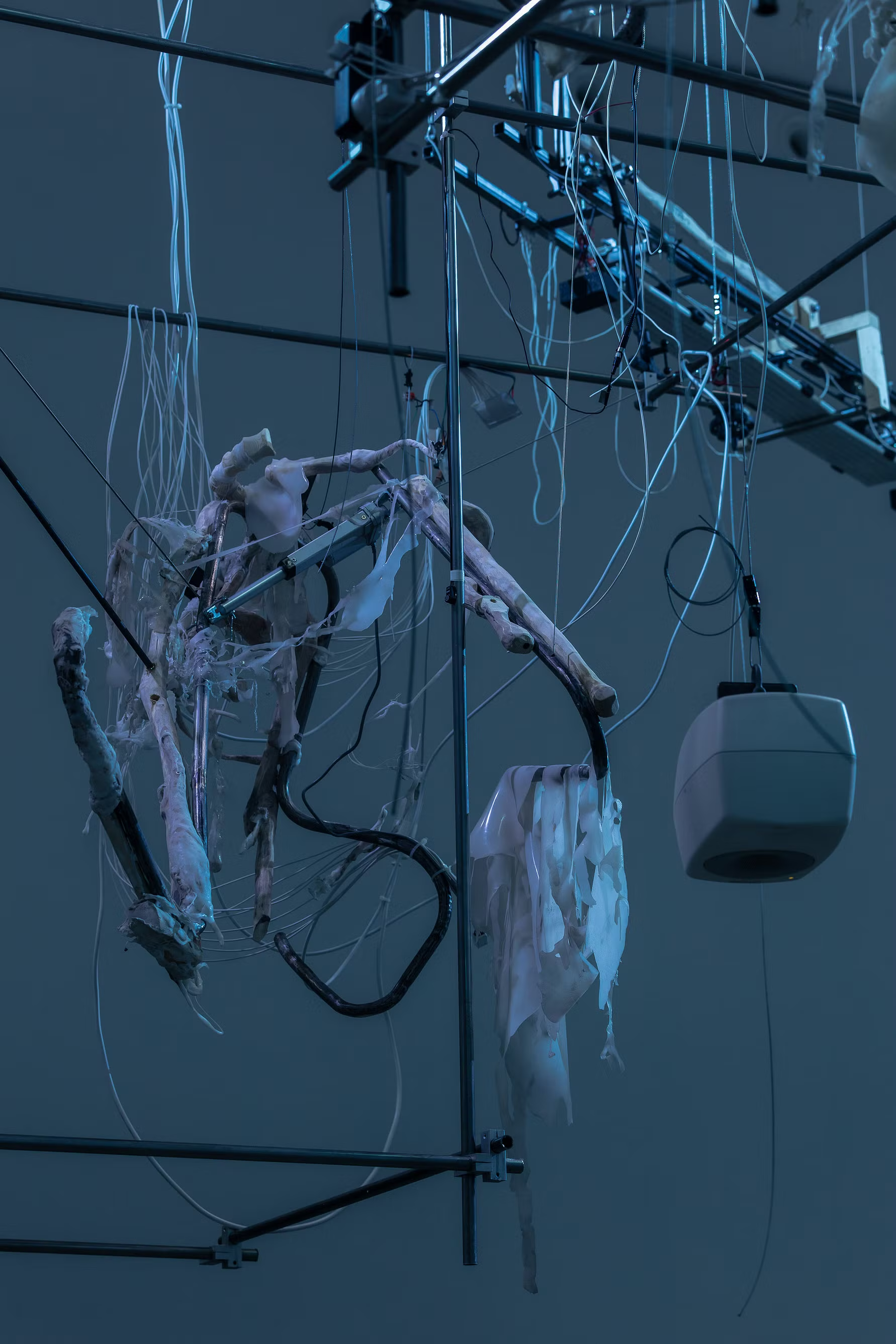
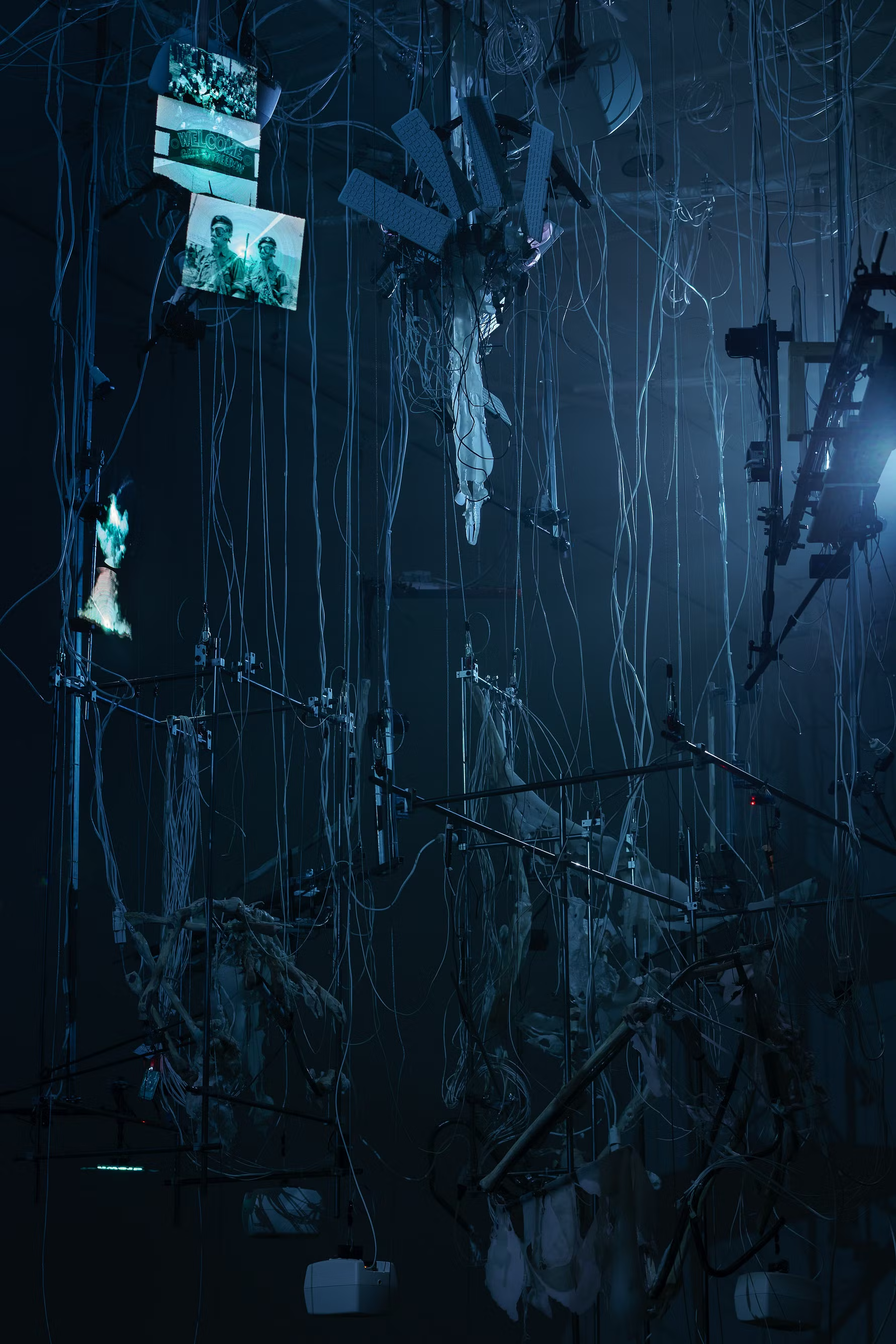
The sea also provides a through-line for the narrative material Hankyul draws on. You hear whispered recordings from three interviews: one with a North Korean defector who escaped by sea; one with a female diving collective based on Geoje Island in South Korea; and one with members of a private divers’ club – also South Korean – who assist in maritime accidents. Otherwise, every sound is generated in real time by Hankyul’s machines. The main source is six rectangular boards with computer keyboards fixed to their undersides, which a mechanical arm swishes across at regular intervals. The hydraulic joints linking the ‘bones’ also feed into the soundscape as they move. A multitude of microphones route the sound to speakers suspended from the ceiling and to a huge subwoofer standing on the floor. The result is a harsh sonic field of dry howls, metallic clunks, and drilling. Rather than standing on the seabed, I feel as if I’m in the engine room of a cargo ship.
While the recorded voices are reduced to a faint hum, the subtitles of the interviews are striking, projected in glowing letters onto horizontal hologram fans directly above our heads. There is something absurd about having these personal testimonies formatted like advertising signage, turning intimate narrative content into an agitating commercial signal. A couple of fans near the top of the structure display black-and-white archival footage of people marching and soldiers in masks. It is charged imagery. But shown on hologram fans at a distance, inside a drift of cables and creaking skeletons, these images too lose emotional force; they become visual ambience, a sprinkle of trauma. I don’t mean to suggest that this reduction is a problem. On the contrary, it points to what I think is a strength in the way Hankyul conducts his assemblage: the sensitive calibration of volume across all components, a balancing of sections that keeps them continuously below the waterline.
It is part of the foley artist’s ethos to conjure atmosphere – to work the affective underside of communication. That also accords with the comedy always built into kinetic art. It appeals to a childlike fascination with things set in motion in silly ways, even when, as here, it is steeped in references to wrenching experience. It wants us to get a little ‘dumb’: to be entertained, moved, unmoored. Shore isn’t laugh-out-loud funny, but it is formally accomplished, with a finish teetering on cute, despite its mechanical complexity and morbid effects. Without any clear boundary regulating the relation between outside and inside, Hankyul’s work is a fragile aggregate of appropriated images, narrative fragments, and machines – an object you immediately sink into as you encounter it. Hankyul’s sea functions less as a stage for compelling human dramas than as a structural metaphor for our increasingly proximate relation to media.
Translated from Norwegian